

Shear strength is a critical mechanical property that measures a material's ability to withstand forces that cause its internal layers to slide past one another. When it comes to rubber pads, understanding shear strength is essential for a variety of applications, from industrial machinery to consumer products. As a leading rubber pad supplier, we are often asked about the shear strength of our products and how it impacts their performance. In this blog post, we will delve into the concept of shear strength, discuss its importance in rubber pads, and explore the factors that influence it.
What is Shear Strength?
Shear strength is defined as the maximum amount of shear stress a material can withstand before it fails or deforms. Shear stress occurs when two parallel forces act in opposite directions on a material, causing it to deform in a manner similar to how a deck of cards would slide when pushed sideways. In the context of rubber pads, shear strength is crucial because these pads are often subjected to forces that tend to push or pull their surfaces in different directions.
Importance of Shear Strength in Rubber Pads
The shear strength of a rubber pad plays a vital role in determining its performance and suitability for various applications. Here are some key areas where shear strength is essential:
- Industrial Machinery: In industrial settings, rubber pads are commonly used as vibration dampeners, shock absorbers, and seals. These pads are often exposed to high levels of shear forces due to the movement and vibration of machinery. A rubber pad with high shear strength can better withstand these forces, ensuring long-term durability and reliable performance.
- Automotive Applications: Rubber pads are used in automotive applications such as engine mounts, suspension bushings, and transmission mounts. These components are subjected to significant shear forces during vehicle operation, including acceleration, braking, and cornering. A rubber pad with adequate shear strength can help reduce vibrations, improve ride comfort, and enhance the overall performance of the vehicle.
- Electrical and Electronics: Rubber pads are also used in electrical and electronic devices to provide insulation, protection, and vibration isolation. In these applications, shear strength is important to ensure that the pads maintain their shape and integrity under normal operating conditions. A rubber pad with low shear strength may deform or fail, leading to potential electrical hazards or device malfunctions.
Factors Affecting the Shear Strength of Rubber Pads
The shear strength of a rubber pad is influenced by several factors, including the following:
- Rubber Compound: The type of rubber compound used in the pad is one of the most significant factors affecting its shear strength. Different rubber compounds have different mechanical properties, including shear strength. For example, natural rubber generally has high shear strength and excellent elasticity, while synthetic rubbers such as neoprene and nitrile rubber offer good resistance to chemicals, heat, and oil.
- Hardness: The hardness of a rubber pad, typically measured on the Shore A scale, also affects its shear strength. Generally, harder rubber pads have higher shear strength than softer ones. However, the relationship between hardness and shear strength is not always linear, and other factors such as the rubber compound and filler content can also play a role.
- Filler Content: The addition of fillers such as carbon black, silica, and clay can significantly improve the shear strength of a rubber pad. Fillers act as reinforcing agents, increasing the stiffness and strength of the rubber compound. However, excessive filler content can also reduce the flexibility and elasticity of the rubber pad, making it more prone to cracking and failure.
- Temperature: The temperature at which a rubber pad operates can have a significant impact on its shear strength. Rubber materials tend to become softer and more flexible at higher temperatures, which can reduce their shear strength. Conversely, at lower temperatures, rubber materials become stiffer and more brittle, which can also affect their shear strength.
- Strain Rate: The rate at which a rubber pad is subjected to shear forces, known as the strain rate, can also influence its shear strength. Rubber materials tend to exhibit higher shear strength at higher strain rates. This is because the rubber molecules have less time to rearrange themselves under high-speed loading, resulting in a more rigid and stronger material.
Measuring the Shear Strength of Rubber Pads
The shear strength of a rubber pad can be measured using a variety of testing methods, including the following:
- Single-Shear Test: In a single-shear test, a rubber pad is placed between two metal plates, and a force is applied parallel to the interface between the rubber and the metal. The force required to cause the rubber to slide or shear off the metal plate is measured, and the shear strength is calculated based on the cross-sectional area of the rubber pad.
- Double-Shear Test: A double-shear test is similar to a single-shear test, but the rubber pad is placed between two sets of metal plates, with the force applied in opposite directions. This test provides a more accurate measurement of the shear strength of the rubber pad, as it minimizes the effects of edge stress and deformation.
- Dynamic Shear Test: A dynamic shear test measures the shear strength of a rubber pad under cyclic loading conditions. This test is commonly used to evaluate the performance of rubber pads in applications where they are subjected to repeated or oscillating shear forces, such as vibration dampeners and shock absorbers.
Our Rubber Pad Products
As a leading rubber pad supplier, we offer a wide range of high-quality rubber pads with varying shear strengths to meet the diverse needs of our customers. Our products include Long-life Socket Insulation Cable Motor Waterproof Rubber Pad and Long-life Insulation Electric Audio Shock Seal Rubber Pad Mat, which are designed to provide excellent insulation, protection, and vibration isolation in various applications.

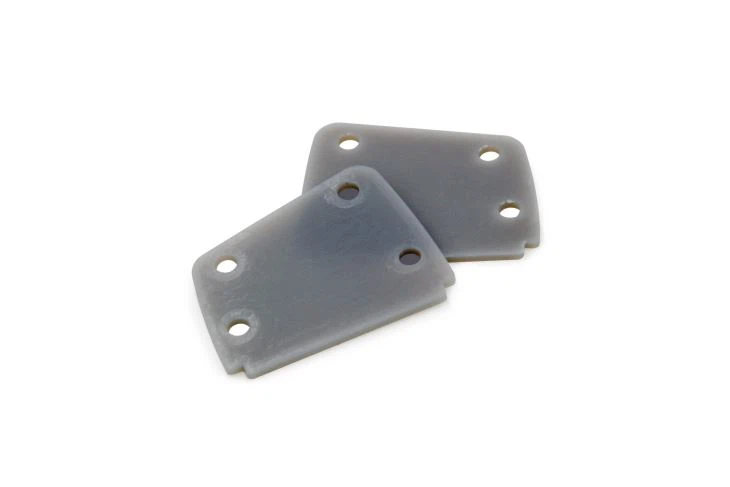
Our rubber pads are made from premium-quality rubber compounds and are engineered to meet the highest standards of performance and durability. We use state-of-the-art manufacturing processes and quality control measures to ensure that our products meet or exceed our customers' expectations. Whether you need a rubber pad for industrial machinery, automotive applications, or electrical and electronics devices, we have the solution for you.
Contact Us for More Information
If you have any questions about the shear strength of our rubber pads or need help selecting the right product for your application, please contact us. Our team of experienced engineers and sales representatives is available to provide you with expert advice and guidance. We can also provide you with samples and technical specifications to help you make an informed decision.
We look forward to the opportunity to work with you and provide you with the highest quality rubber pads and excellent customer service.
References
- ASTM D732 - Standard Test Method for Shear Strength of Plastics by Punch Tool.
- Rubber Science and Technology by Maurice Morton.
- Handbook of Elastomers by Friedrich Röthemeyer and F. Sommer.