

Hey there! As a cable pad supplier, I often get asked about the friction coefficient of cable pads. It's a super important factor that can make or break the performance of these pads in various applications. So, let's dive right in and talk about what the friction coefficient of a cable pad really is and why it matters.
First off, what's the friction coefficient? Well, in simple terms, it's a number that shows how much two surfaces stick together when they're in contact. You know when you try to slide a book across a table? If the table is really smooth, the book slides easily, which means the friction coefficient between the book and the table is low. But if the table is rough, the book doesn't slide as easily, and that's because the friction coefficient is high.

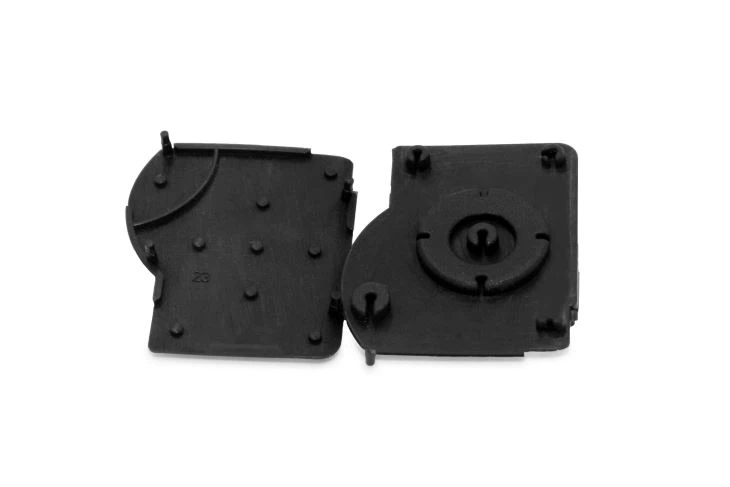
For cable pads, the friction coefficient is all about how well the pad grips the cable and the surface it's placed on. A high friction coefficient means the pad will hold the cable firmly in place, reducing the chances of it slipping or moving around. This is crucial in a lot of situations, like when you're dealing with heavy cables that need to stay put, or in environments where there's a lot of vibration or movement.
Let's take a look at some real - world scenarios where the friction coefficient of a cable pad plays a big role. In industrial settings, cables are often used to transmit power or data. These cables can be quite heavy, and if they're not properly secured, they can cause all sorts of problems. A cable pad with a high friction coefficient can keep these cables in place, preventing them from getting tangled or damaged. This not only ensures the smooth operation of the equipment but also reduces the risk of accidents.
In the automotive industry, cable pads are used to manage the wiring inside vehicles. Cars are constantly moving, and there's a lot of vibration. If the cable pads don't have a good friction coefficient, the cables can start to rattle around, which can lead to wear and tear over time. By using cable pads with the right friction coefficient, manufacturers can ensure that the cables stay in place, improving the overall reliability of the vehicle.
Now, you might be wondering how we measure the friction coefficient of a cable pad. There are a few different methods, but one of the most common is the inclined plane test. In this test, we place the cable pad on an inclined surface and gradually increase the angle of the incline until the cable starts to slide. The angle at which the cable starts to slide is then used to calculate the friction coefficient.
Another factor that can affect the friction coefficient of a cable pad is the material it's made from. Different materials have different surface properties, which can influence how well they grip the cable. For example, rubber is a popular material for cable pads because it has a relatively high friction coefficient. It's also flexible and durable, making it suitable for a wide range of applications.
We offer a variety of cable pads, like the Long - life Insulation Electric Audio Shock Seal Rubber Pad Mat and the Long - life Socket Insulation Cable Motor Waterproof Rubber Pad. These pads are made from high - quality rubber, which gives them a good friction coefficient. They're also designed to be long - lasting and can withstand different environmental conditions.
The surface texture of the cable pad also matters. A pad with a rough surface will generally have a higher friction coefficient than one with a smooth surface. We can control the surface texture during the manufacturing process to get the desired friction coefficient. For example, we can add patterns or grooves to the surface of the pad to increase its grip.
But it's not just about having a high friction coefficient. Sometimes, we might actually want a lower friction coefficient. In some applications, like when the cable needs to be moved or adjusted frequently, a pad with a lower friction coefficient can make it easier to do so. So, it's all about finding the right balance based on the specific requirements of the application.
When choosing a cable pad, it's important to consider the friction coefficient along with other factors like durability, flexibility, and chemical resistance. For instance, if the cable pad is going to be used in a harsh chemical environment, it needs to be made from a material that can resist corrosion.
As a cable pad supplier, we understand the importance of providing our customers with the right products. That's why we conduct a lot of research and testing to make sure our cable pads have the optimal friction coefficient for different applications. We also work closely with our customers to understand their specific needs and recommend the best cable pads for them.
If you're in the market for cable pads, you might be interested in our Long - life Insulation Electric Audio Shock Seal Rubber Pad Mat. This pad is not only great at providing insulation but also has a good friction coefficient to keep your cables in place. And if you need something for a motor or socket application, our Long - life Socket Insulation Cable Motor Waterproof Rubber Pad is a great choice. It's waterproof and has the right amount of grip to secure your cables.
In conclusion, the friction coefficient of a cable pad is a crucial factor that can have a big impact on its performance. Whether you're in the industrial, automotive, or any other industry that uses cables, choosing the right cable pad with the appropriate friction coefficient is essential. We're here to help you make that choice. If you have any questions about our cable pads or need advice on which one is right for your application, don't hesitate to reach out. We're always happy to have a chat and help you find the best solution for your cable management needs. Let's work together to ensure that your cables are secure and your operations run smoothly.
References
- ASTM International. (20XX). Standard test methods for measuring friction coefficients.
- Automotive Wiring Handbook. (20XX). Publisher: XYZ.