

Do rubber pads have good friction? This is a question that often comes up in various industries and applications where rubber pads are used. As a supplier of high - quality rubber pads, I'd like to delve deep into this topic to provide you with a comprehensive understanding.
The Science Behind Rubber Friction
Friction is the force that resists the relative motion of two surfaces in contact. When it comes to rubber, its friction properties are quite unique and complex. Rubber is a viscoelastic material, which means it has both viscous (fluid - like) and elastic (spring - like) characteristics.
One of the main factors contributing to the good friction of rubber is its ability to deform. When a rubber pad comes into contact with a surface, it can conform to the microscopic irregularities of that surface. This increased contact area between the rubber and the surface leads to a higher frictional force. For example, when a rubber - soled shoe walks on the ground, the rubber deforms around the small bumps and dips on the floor, creating more points of contact and thus better grip.
Another aspect is the molecular interaction between rubber and the contacting surface. Rubber molecules can form weak chemical bonds, known as van der Waals forces, with the molecules of the surface it touches. These forces add to the overall frictional resistance.
Factors Affecting Rubber Pad Friction
However, the friction of rubber pads is not always consistent. There are several factors that can influence it:
Surface Roughness: The roughness of the surface in contact with the rubber pad plays a crucial role. Generally, a moderately rough surface provides better friction than a very smooth or extremely rough one. On a very smooth surface, there are fewer irregularities for the rubber to grip onto. On the other hand, an extremely rough surface may cause the rubber to wear out quickly or not conform properly, reducing friction.
Temperature: Temperature has a significant impact on the friction of rubber. As the temperature increases, the rubber becomes softer and more compliant, which can increase the contact area and friction in some cases. But at very high temperatures, the rubber may start to lose its mechanical properties, and the friction may decrease. Conversely, at low temperatures, rubber becomes stiffer, and its ability to deform is reduced, resulting in lower friction.
Load: The amount of force pressing the rubber pad against the surface also affects friction. Up to a certain point, increasing the load will increase the frictional force because it increases the contact area between the rubber and the surface. However, if the load is too high, it may cause excessive deformation or damage to the rubber, which can lead to a decrease in friction.
Applications Benefiting from Good Rubber Pad Friction
The good friction properties of rubber pads make them suitable for a wide range of applications:
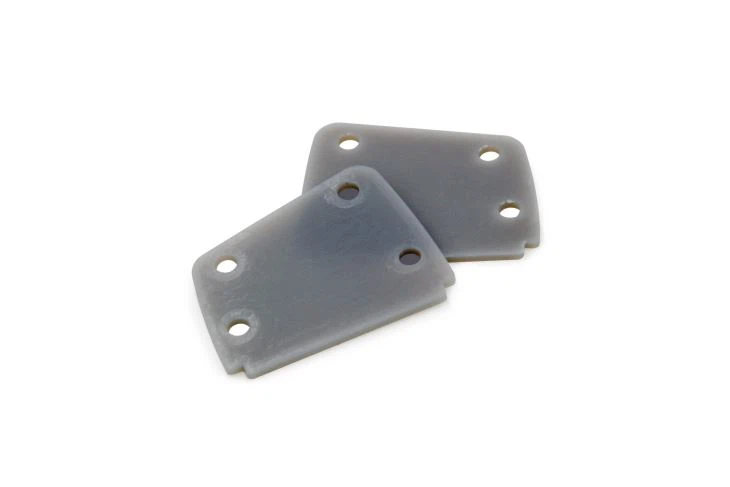
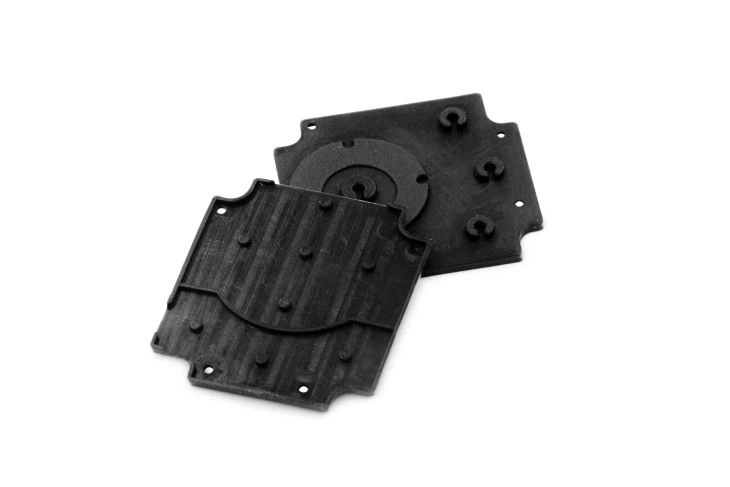
Industrial Machinery: In machinery, rubber pads are used to prevent slippage. For example, they can be placed under heavy equipment to keep it stable during operation. The high friction between the rubber pad and the floor surface ensures that the machinery doesn't move around, reducing the risk of accidents and improving the efficiency of the operation.
Automotive Industry: Rubber pads are used in various parts of vehicles. They can be found in the braking system, where the friction between the rubber brake pads and the brake discs is essential for stopping the vehicle safely. Additionally, rubber pads are used in the interior of cars to prevent objects from sliding around, such as in the cup holders or on the dashboard.
Electrical and Electronics: Rubber pads are also widely used in the electrical and electronics industry. For instance, the Long - life Socket Insulation Cable Motor Waterproof Rubber Pad provides not only insulation but also good friction. It can be used to secure cables and prevent them from moving or being dislodged, ensuring the stability and safety of the electrical system. The Long - life Insulation Electric Audio Shock Seal Rubber Pad Mat is another example. It can be placed under audio equipment to reduce vibrations and keep the equipment in place due to its good friction properties.
Testing and Quality Assurance
As a rubber pad supplier, we understand the importance of ensuring the friction performance of our products. We conduct a series of tests to measure and verify the friction of our rubber pads. One common test is the coefficient of friction test, which measures the ratio of the frictional force to the normal force between the rubber pad and a reference surface.
We also perform wear tests to ensure that the rubber pads maintain their friction properties over time. By simulating real - world conditions, we can predict how the rubber pads will perform in actual applications. Only after passing these rigorous tests do our rubber pads reach the market.
Conclusion
In conclusion, rubber pads generally have good friction properties due to their viscoelastic nature and the ability to conform to surfaces. However, the friction can be affected by various factors such as surface roughness, temperature, and load. Despite these variables, the wide range of applications that benefit from rubber pad friction clearly demonstrates its importance.
If you are in need of high - quality rubber pads with excellent friction performance for your specific application, we are here to help. Whether you are in the industrial, automotive, or electrical field, our rubber pads can meet your requirements. We invite you to contact us for procurement and further discussions. We are confident that our products will provide you with the friction and quality you need.
References
- Bhushan, B. (2013). Principles and Applications of Tribology. Wiley.
- Schallamach, A. (1978). The friction of rubber. Wear, 46(1), 1 - 31.
- Gent, A. N. (2001). Rubber and Rubber - like Polymers. Hanser Publishers.