

Can seal mats be used in a printing press area? That's a question I've been getting a lot lately as a seal mat supplier. I'm here to break it down for you and give you the lowdown on whether seal mats are a good fit for your printing press setup.
First off, let's talk about what seal mats are and what they do. Seal mats are typically made of rubber or other flexible, durable materials. They're designed to create a seal between two surfaces, preventing the leakage of liquids, gases, or even dust. They can also provide insulation, shock absorption, and protection against wear and tear.
Now, let's think about the printing press area. Printing presses are complex machines that involve a lot of moving parts, high pressures, and often the use of inks and solvents. There are several factors to consider when deciding if seal mats can be used in this environment.
1. Chemical Resistance
Inks and solvents used in printing can be quite harsh. Some inks contain strong chemicals that can break down certain types of rubber over time. So, if you're thinking of using seal mats in a printing press area, you need to make sure the mats are chemically resistant.
For example, if you're using water - based inks, a general - purpose rubber seal mat might work just fine. But if you're dealing with solvent - based inks, you'll need a more specialized rubber that can withstand the chemicals. Our Long - life Socket Insulation Cable Motor Waterproof Rubber Pad is made from a high - quality rubber that offers good chemical resistance, making it a potential option for printing press areas where chemical exposure is a concern.
2. Temperature Resistance
Printing presses can generate a significant amount of heat, especially during long - run operations. The seal mats need to be able to withstand the high temperatures without losing their shape or sealing properties.
Some rubber materials start to degrade at relatively low temperatures, while others can handle much higher heat. You want to choose a seal mat that can handle the temperature range in your printing press area. Our Long - life Insulation Electric Audio Shock Seal Rubber Pad Mat is designed to have good temperature resistance, which means it can maintain its integrity even in a warm printing environment.
3. Mechanical Stress
Printing presses have a lot of moving parts, and the seal mats may be subjected to mechanical stress such as compression, vibration, and friction. The mats need to be strong enough to withstand these forces without tearing or wearing out quickly.
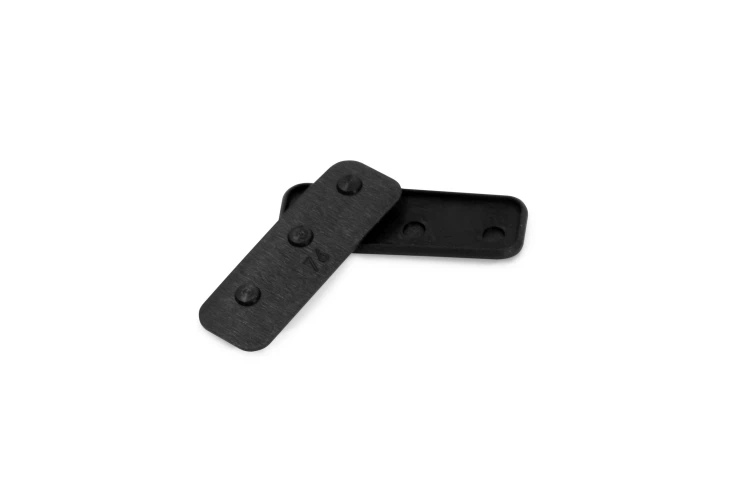
A good seal mat should have high tensile strength and abrasion resistance. This ensures that it can hold up under the constant movement and pressure in the printing press area. Our seal mats are engineered to have excellent mechanical properties, so they can stand up to the rigors of the printing environment.

4. Dust and Particle Sealing
In a printing press area, dust and small particles can be a problem. They can get into the machinery and cause malfunctions, or they can contaminate the printed materials. Seal mats can help to create a barrier against dust and particles, keeping the printing press area clean and the machinery running smoothly.
By placing seal mats around the edges of the printing press or in areas where dust is likely to enter, you can reduce the amount of dust and debris that gets into the machine. This can lead to fewer maintenance issues and better - quality prints.
5. Noise Reduction
Printing presses can be quite noisy. The constant movement of parts and the pressure involved in the printing process can create a lot of noise. Seal mats can act as a shock absorber and help to reduce the noise level in the printing press area.
This is not only beneficial for the workers in the area, who will experience less noise pollution, but it can also be important for the overall working environment. A quieter workplace is often a more productive and comfortable one.
So, can seal mats be used in a printing press area? The answer is yes, but with the right considerations. You need to choose seal mats that have the appropriate chemical resistance, temperature resistance, mechanical strength, and sealing properties.
If you're in the market for seal mats for your printing press area, I'd love to have a chat with you. We've got a wide range of seal mats that can be customized to meet your specific needs. Whether you need a small mat for a particular part of your press or a large - scale sealing solution, we can help.
Don't hesitate to reach out if you have any questions or if you'd like to discuss your requirements in more detail. We're here to make sure you get the best seal mats for your printing press area.
References
- "Handbook of Rubber Technology", Second Edition, Edited by Maurice Morton
- "Industrial Sealing Technology", by John H. Bickford