

Are rubber pads resistant to ozone?
As a prominent rubber pad supplier, I've delved deep into the properties and performance of rubber pads in various environmental conditions. One question that frequently surfaces among our clients is, "Are rubber pads resistant to ozone?" This query is crucial as ozone can have significant impacts on the durability and functionality of rubber products. In this blog post, we'll explore the relationship between rubber pads and ozone, examining what makes some rubber pads ozone - resistant and how this resistance affects practical applications.
Understanding Ozone and Its Effects on Rubber
Ozone (O₃) is a highly reactive gas composed of three oxygen atoms. It occurs both naturally in the Earth's stratosphere and is produced at ground - level through industrial processes, electrical discharges, and vehicle emissions. While stratospheric ozone protects us from harmful UV radiation, ground - level ozone is a pollutant that can degrade various materials, including rubber.
When rubber comes into contact with ozone, a chemical reaction known as ozone cracking occurs. Ozone attacks the double bonds in the rubber polymer chains, causing them to break. This leads to the formation of cracks on the surface of the rubber. Over time, these cracks can deepen and widen, weakening the rubber's structure and reducing its mechanical properties such as tensile strength, elongation at break, and flexibility. Eventually, the rubber pad may fail, losing its ability to perform its intended function.
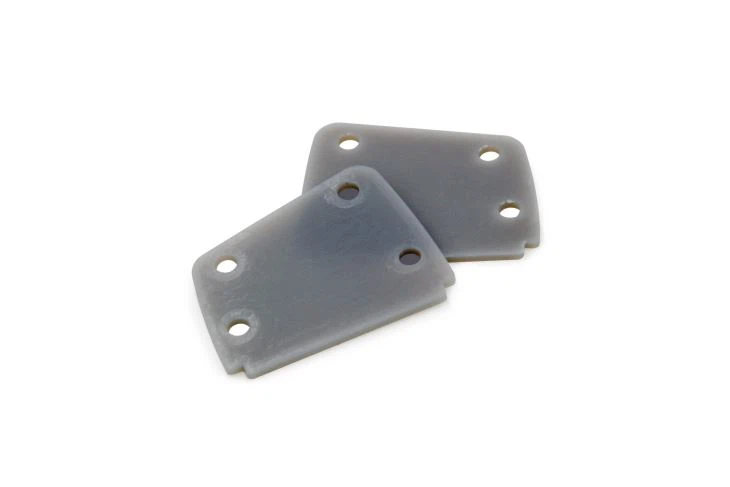
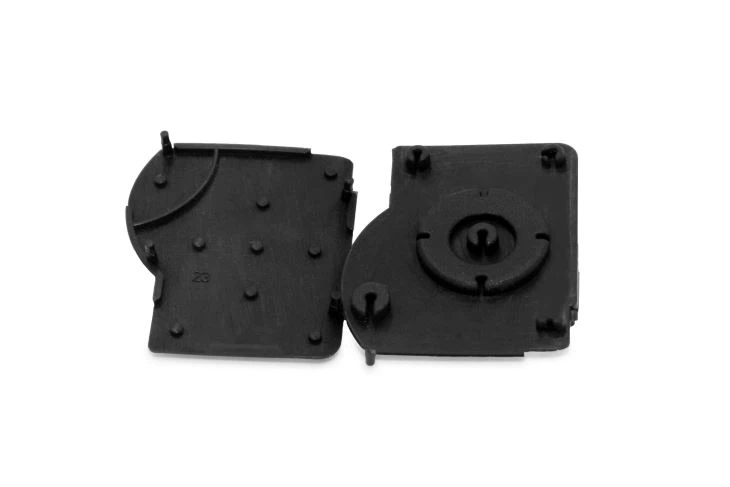
Factors Affecting Ozone Resistance in Rubber Pads
Not all rubber pads are created equal when it comes to ozone resistance. Several factors determine how well a rubber pad can withstand ozone exposure:
- Rubber Material Composition
- Different types of rubber have varying degrees of ozone resistance. For example, natural rubber (NR) is highly susceptible to ozone attack because of its high content of double bonds in its polymer structure. On the other hand, synthetic rubbers like ethylene propylene diene monomer (EPDM) and neoprene (CR) are known for their excellent ozone resistance. EPDM has a saturated polymer backbone with few double bonds, making it less reactive to ozone. Neoprene also has good ozone resistance due to the presence of chlorine atoms in its structure, which provide some protection against ozone.
- Additives
- Additives can be used to enhance the ozone resistance of rubber pads. Antiozonants are chemicals that are added to the rubber compound to prevent or reduce ozone cracking. There are two main types of antiozonants: physical antiozonants, which form a protective layer on the rubber surface, and chemical antiozonants, which react with ozone before it can attack the rubber polymer. Waxes are commonly used physical antiozonants. They migrate to the rubber surface and form a thin film that acts as a barrier against ozone. Chemical antiozonants, such as p - phenylenediamine derivatives, react with ozone to form stable products, thus protecting the rubber.
- Environmental Conditions
- The concentration of ozone in the environment plays a significant role in the rate of ozone cracking. Higher ozone concentrations will accelerate the degradation process. Additionally, factors such as temperature, humidity, and mechanical stress can also affect ozone resistance. For example, higher temperatures can increase the rate of chemical reactions, including the reaction between ozone and rubber. Mechanical stress, such as stretching or bending of the rubber pad, can also make it more susceptible to ozone cracking as it exposes more of the rubber's internal structure to ozone.
Ozone - Resistant Rubber Pads in Practical Applications
Ozone - resistant rubber pads have a wide range of applications where exposure to ozone is a concern.
- Electrical Applications
- In electrical systems, rubber pads are used for insulation, sealing, and vibration damping. For instance, in electrical sockets and motors, rubber pads need to be ozone - resistant to ensure long - term performance. Our Long - life Socket Insulation Cable Motor Waterproof Rubber Pad is designed with ozone - resistant materials to protect electrical components from environmental factors, including ozone. It provides reliable insulation and waterproofing, even in areas with high ozone levels.
- Audio Equipment
- Rubber pads are used in audio equipment to isolate vibrations and prevent shock. In electronic audio devices, where precision is key, ozone - resistant rubber pads are essential. Our Long - life Insulation Electric Audio Shock Seal Rubber Pad Mat offers excellent ozone resistance, ensuring that the audio quality remains unaffected by ozone - induced degradation over time.
How to Select Ozone - Resistant Rubber Pads
When choosing ozone - resistant rubber pads, consider the following:
- Application Requirements
- Determine the specific requirements of your application, such as the level of ozone exposure, temperature range, and mechanical stress. If the rubber pad will be used in an outdoor environment with high ozone levels, a highly ozone - resistant material like EPDM is recommended.
- Testing and Certification
- Look for rubber pads that have been tested for ozone resistance. Reputable manufacturers will provide test results and certifications to prove the performance of their products. This ensures that the rubber pads meet the required industry standards for ozone resistance.
Conclusion
In conclusion, the ozone resistance of rubber pads is a critical factor that affects their performance and durability. While not all rubber pads are ozone - resistant, choosing the right rubber material, adding appropriate additives, and considering environmental conditions can significantly enhance ozone resistance. As a rubber pad supplier, we offer a range of ozone - resistant rubber pads suitable for various applications, including electrical and audio equipment.
If you're in need of high - quality ozone - resistant rubber pads for your project, we invite you to contact us for procurement and further discussions. Our team of experts is ready to assist you in selecting the most suitable rubber pads for your specific needs.
References
- ASTM D1171 - Standard Test Method for Rubber Property—Effect of Ozone on Small Specimens.
- Morton, M. (Ed.). (1995). Rubber technology. Springer Science & Business Media.
- Brown, R. F. (1996). Handbook of elastomers. Marcel Dekker.